
Support Your Literacy Student Learning Objectives (SLOs)
*Webinar Of The Month
*Usage Statistics
*Literacy Implementation Plan Module (update coming soon)
Do you need to submit student learning objectives for the 2015-16 school year? Are your deadlines are fast approaching? TeachingBooks.net can help you design a plan for…
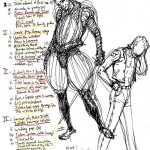
 Drawing a graphic novel is a bit like making a film—on your own. The artist becomes the writer, director, production crew, costume designer, art director, location scout, cinematographer, the special effects team, the actors, and the editor. Unlike film, however, the images are static and time, motion, and sound must be implied through picture sequences, or by descriptive text, such as “We waited for hours,” or “WHAM!”

 The other day, I was speaking to a group about my book EL DEAFO (Abrams, 2014), an autobiographical graphic novel that chronicles my experiences growing up as a deaf kid with hearing aids. After my presentation, a man, who happened to be deaf, asked me what I thought was the single most important technological advancement for deaf people since the invention of hearing aids. My answer? The Internet, and more specifically, email.